Growing Berries
Bare-Root vs Plug Strawberry Plants: Which Should You Order?
Order strawberry plants and you will be asked to choose between things that sound like industry jargon: frigo, fresh-dug, plugs, tray plants, conditioned plugs. Most catalogs explain the difference in one sentence, usually about price.
The distinctions are real, and they change how fast the planting establishes, how much watering it needs, and how long you wait for fruit. They come out of commercial production, but they apply directly to a home bed.
The Planting Materials
Bare-root frigo plants
"Frigo" is the cold-stored bare-root plant, and it is the traditional material for spring planting in cold climates.
Frigo plants are dug from the nursery field in early to mid winter, once the plants are fully dormant and have accumulated their chilling. Tops are trimmed off, roots and crowns are cleaned, and they go into cold storage at about -1.5°C — just below freezing, which holds true dormancy rather than letting the plant slowly deplete itself.
Storability is roughly 5 to 6 months, which is why the supply window closes: plants dug in January are generally gone by June.
The key horticultural point is that frigo plants carry relatively few pre-formed flower initials. The buds that produce the first crop are largely formed after planting, so first fruit comes later than from more advanced material. In exchange, frigo is the cheapest material per plant by a wide margin, and it ships light because there is no soil.
Bare-root fresh-dug plants
Fresh-dug bare-root plants are harvested in fall and shipped immediately rather than stored. This is the material behind winter production in Florida and Mexico, where plants go in during fall and fruit through the winter.
It depends on cultivar physiology. Short-day (June-bearing) cultivars initiate flower buds under a photoperiod of about 13 hours or less, or in response to low temperature, and a fall-planted short-day cultivar in a mild winter climate sits under exactly those conditions. Outside the winter-production regions this is not what you will be offered; it mainly explains why strawberry calendars differ so much between Florida and Minnesota.
Plugs (rooted runner tips)
A plug is a runner tip cut from a mother plant and rooted under mist, typically over 5 to 10 days, in a small cell of growing medium.
The standard for a finished plug is roughly 3 to 5 true leaves and a crown at least 1 cm in diameter. A plug below that specification is underdeveloped and will not perform.
Because the plug goes into the ground with an intact, actively growing root system in its own medium, it establishes noticeably faster than bare-root and needs considerably less establishment watering. In a home bed that means less risk of losing plants because you were away for a long weekend at the wrong time.
The trade-off is cost. Plugs are more expensive per plant, and because they ship with soil they are heavier, so freight costs more.
Tray plants
Tray plants are the most advanced material available: multi-crowned plants grown out for 3 to 4 months before lifting, then cold stored at about -1.5°C. Because they went into storage with the season's flower initiation already complete, they are loaded with dormant flower buds. That makes them the fastest material to fruit by a clear margin and makes the first crop more predictable. They also store longer than frigo — roughly 10 to 11 months — which gives suppliers a much wider shipping window.
They are the most expensive option and primarily a commercial product for programmed production. Rarely worth the premium for a home matted row.
Conditioned plugs
A conditioned plug is one given a controlled treatment to force flower initiation before it ships. Short-day cultivars are held under controlled dark and cool conditions — artificially imposing the short photoperiod and low temperature those cultivars require — so flower buds are initiated in the facility rather than in your bed. The plug arrives ready to flower, compressing time to first harvest.
This is mostly a commercial tool for hitting a market window, and for a home planting it is a nice-to-have rather than a reason to pay extra.
The Comparison
| Frigo bare-root | Fresh-dug bare-root | Plug | Conditioned plug | Tray plant | |
|---|---|---|---|---|---|
| What it is | Dormant, cold-stored, no soil | Fall-dug, shipped immediately | Runner tip rooted under mist | Plug given dark/cool treatment | Multi-crowned, grown 3-4 months, stored |
| When dug or made | Early to mid winter | Fall | Rooted in 5-10 days | Rooted, then conditioned | Grown out, then lifted |
| Storage | About -1.5°C, 5-6 months | Not stored | Not stored | Not stored | About -1.5°C, 10-11 months |
| Flower buds at planting | Few pre-formed initials | Initiated in field after planting | Few | Initiated during conditioning | Many, dormant |
| Time to first fruit | Slowest | Depends on climate | Moderate | Fast | Fastest |
| Establishment | Needs careful watering | Needs careful watering | Fast, less water needed | Fast | Fast |
| Cost per plant | Lowest | Low | Higher | Higher | Highest |
| Shipping | Light, compact | Light | Heavier, ships with soil | Heavier | Heaviest |
| Typical availability | Through about June | Regional, fall | Seasonal, made to order | Made to order | Limited |
Which Should You Actually Order?
For a first home bed, the choice comes down to your region and your planting season more than anything else.
Fall planting in the Southeast and mid-South: order plugs. Fall establishment in a warm climate is a race. The plant has to build roots and size up before cold weather, in soil that is still warm and often dry. Bare-root material planted into those conditions needs consistent irrigation for weeks and losses can be significant. Plugs go in with roots already working and shorten that vulnerable window considerably, and the extra cost per plant buys real insurance. Clemson's guide to growing strawberries covers the annual hill system most Southeast plantings use.
Spring matted row in the North: order bare-root frigo. A spring planting in a cold climate goes into cool, moist soil when establishment is easiest. Bare-root handles that well, and matted row needs a lot of plants — the whole point is that mother plants runner out and fill the bed. At volume, cost per plant dominates. University of Minnesota Extension's guide to growing strawberries in the home garden lays out matted row spacing and first-year management.
If you only want a dozen plants, the cost difference between the materials is a few dollars total, and you should just buy whatever is easiest to handle. That is plugs.
Ohio State's overview of planting materials for controlled environment berry production is the clearest single reference on how these materials differ and why commercial growers choose between them.
Handling Bare-Root Plants on Arrival
Bare-root plants arrive dormant and dehydrated, and most losses happen in the days between the box and the ground.
Open the box immediately. Check that roots are moist and crowns firm. A shipment that arrived warm and dry has already been damaged.
Keep them cold and moist until planting. A refrigerator just above freezing is ideal, with the packing material damp but not wet — soggy plants rot. They will hold a couple of weeks this way; they will not hold on a porch.
Soak the roots briefly before planting. Twenty minutes to an hour in plain water. Do not soak overnight; extended soaking drowns the crown.
Never let the roots dry out during planting. Roots exposed to sun and wind on a dry spring day can be killed in minutes. Carry plants to the bed in a bucket with an inch of water and take out one at a time.
Trim long roots to about 4 inches if they are unwieldy, and spread them in a fan rather than balling them up.
Crown Depth Is the Error That Matters Most
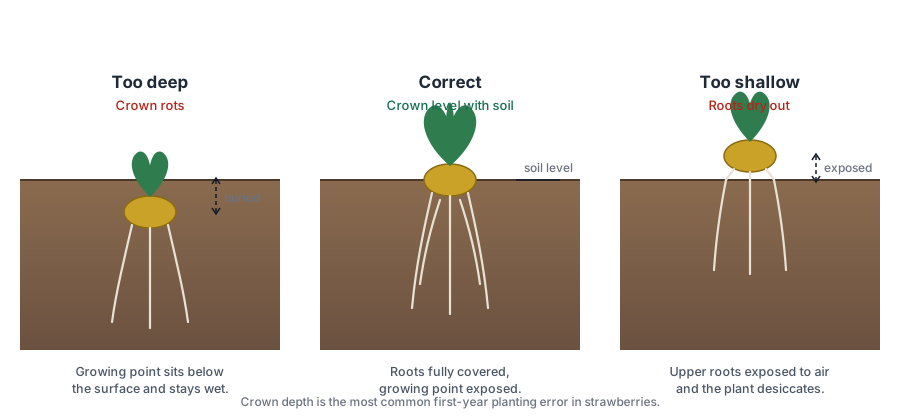
If you take one thing from this: the crown should sit level with the soil surface.
The crown is the short, thick stem between the roots and the leaves, and it is the growing point of the plant. Get its depth wrong and the plant fails regardless of everything else you did right.
Too deep and the crown rots. Soil over the growing point holds moisture against it, buds cannot push through, and the plant declines or collapses.
Too shallow and it dries out. An exposed crown with roots at or above the soil line desiccates in the first dry, windy spell.
The target is the base of the crown at soil level — roots fully covered, crown sitting on the surface with the growing point clear. Firm the soil, water in immediately, then check a few days later: soil settles, and plants that looked right on planting day are sometimes an inch too deep by the end of the week. Lift and reset any that moved.
The Ordering Calendar
Strawberry plants are grown to order, and the good cultivars sell out.
For spring shipment, order between December and March. Earlier is better for cultivar selection; by March you are choosing from what is left. Most suppliers ship on a schedule set by your region's planting window rather than on demand, so you order in winter and the box arrives when the ground is workable. For fall plug planting in the South, ordering runs earlier in the year, since plugs have to be propagated to fill the order.
Two things to settle before you order: which cultivar suits your region and system, and what the plants are certified for. Certification for freedom from specific viruses is not the same thing as organic certification, and the difference matters more than most catalogs make clear — that distinction is worked through in certified organic vs certified disease-free. For timing by region, see when to plant strawberries by zone, and for managing a berry planting without synthetic inputs, growing berries organically.